Topline?

So, in horsey circles, you will probably hear the term “topline” be thrown around alot… We tend to nod our heads and make a mental note to google that later.

First of all, what exactly is topline? 

Topline is the term used to describe the muscle cover over the top of the horse’s neck, back and rump. So, every horse does have a topline.

Why is it so important?

A correctly developed topline will allow a horse to do it’s job better. It will help the horse to work in an “arched” outline that will help them to carry the rider with more ease.

Why do we want a horse to work in the correct arched outline?

Because their backs are much stronger when they are ridden this way. Think about the stability of a arched bridge over that of a suspension bridge. Which would you prefer to walk over? The one that is stable, or the one that sways?
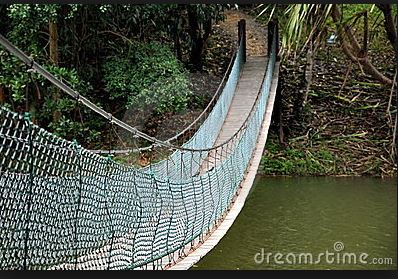
susp_bridge

OR

arched bridge

Personally, I take the nice solid looking one!

I am not suggesting that all horse need to go around in an full dressage Grand Prix outline, but rather, they should always be encouraged to use themselves well as possible.

Will a correct topline just happen or does it require specific exercises?

Hmm, think of this this way… If I want 6 pack abs, then I will need to do some specific exercises to make that happen, along with general fitness.

If we want our horses to develop correct topline, we need to ride and work our horses in such a way that it can correctly form. We also need to make sure their diet lends itself to building muscle… so, this means making sure they are getting enough protein for the level of work that is expected of them.

First steps?

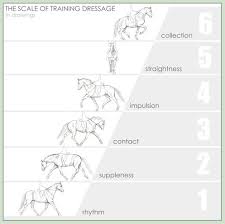
Here, we are going to look at the training pyramid, (it’s not just for dressage!!)
images

For a horse to work correctly (and hence build topline), they must be going forward in an even rhythm and to be supple.  This is often though of as “long and low” .

Basic things to look for when you are starting a “program” with your horse…

  • All steps are even.
  • The horse is relaxed and listening to the rider
  • The horse’s under neck is relaxed and not being used to steady the horse or the rider
  • The rear legs are “engaged”, basically the rear feet will fall in or in-front of the hoof prints of the front feet.


Basics that will help with this…

  • You are riding in a good position, with self balance and allowing your horse to swing underneath you.
  • HILL WORK!! 


Why are your lessons so cheap?

OK, so, in comparison with some, a basic cost of $25 for a lesson is on the low side.  I keep the cost of lessons low because I know that keeping horses is expensive, and if you are doing so on a tight budget, the first thing that goes are lessons. I don’t think this is a place where compromise should be made. Lessons are of a great value to all riders, as we always have something new to learn or areas that need improvement, and having someone to help with that and point us in the right directions is invaluable.

I do not charge less because I do not have the ability to coach, I keep my prices low because I would rather riders have access to a trainer, than to lose interest on improving their relationship with their horse.

The ‘Unseen’ costs of horse ownership

As a follow up to my post regarding the basic costs of horse ownership, I would like to highlight some of the more common overlooked costs, both monetary, physically and mentally of owning your own horse.
Where the horse lives:
Horses at home
While the idea of looking out of your window, and seeing your lovely equine friend grassing lazily in the summer sun in the perfect green pasture and the lovely, chew free fencing, this is not the reality of keeping a horse at home. It is more about rainy dark nights, chewed fencing and an ever growing muck heap.
But it is also about the routine of chores, the ability to ride when ever you have a spare moment, the chance to catch a quick hug with your friend to help sooth the day.
If you are thinking of keeping your horse at home, consider the potential impacts of:
  • A longer commute,which impacts both time and cost in both gas and car maintenance, as there are not many properties large enough for a horse in the city.
  • A higher property insurance cost. (Budget over $5000 a year)
  • Potentially bigger mortgage, or higher rent. A farm property with generally cost more than a “normal” house. OK, Vancouver may be slightly different, but generally the statement does apply!
  • Maintenance costs of a farm are much higher than a single family home, and then there is the need for additional vehicles… for example, a tractor!!
  • Do you have the time for daily chores and riding? Horse need some stimulation and human contact, otherwise they can become unruly and even dangerous to handle.
  • What about vacations, or even just being late home one day? Do you have someone that can cover for you?
  • What if you are sick and cannot do your chores?
Boarding your horse
The impacts of boarding a horse do differ depending on the type of board, but apart for the cost of the board, these are the main items that need to be considered:
  • The time and cost of going to and from the barn, the additional wear and tear on your vehicle, gas money and time it takes to travel, which may need to be multiple times a day.
  • Time required at the barn to ride and do your chores (if not on full board). How does this impact on other areas of your life?
  • If you have children, what are they doing while you are looking after you horse at the barn?
Additional costs and considerations also include:
  • Tack –  A saddle and bridle which need to be in good repair so that you are your horse are safe
  • Supplies –  Saddle soap, horse shampoo, hoof oils, fly spray, first aid sprays and creams… as a horse person, we like our lotions and potions!
  • Rugs –  They get destroyed, if not by your horse, then it could well be someone else’s horse, then you will also need to be some anti-chew spray and a rug repair kit…
  • Horse appointments –  Who will be there for your farrier or the vet?
  • You decide to show…. that is a whole post on it’s own!!
Owning a horse is a wonderful experience, but, before taking the plunge, please consider the effects it will have on your life and on the life of your family, as it will affect them too.

The BASIC cost of horse ownership

Recently, I have seen a lot of free horses posted on various pages, and I have been asked a number of time about how much does horse ownership cost, so I thought I would give a brief outline here on how much it may cost to keep a horse per calendar month in my local area.

  1. Somewhere to live – there are two main options, either at a boarding barn or at home, both have a cost
    1. Board –  from self to full, this can be from $150 (for grass only) to $800 plus depending on the facility
    2. At home –  even if you have space t home for a horse, you need to consider maintenance and repair, along with possible property improvements. For example, horses love to chew through fencing, fencing boards are not cheep, but need to be replaced for the safety of your horse. A simple shelter will cost $2000. A monthly cost of $100 is not over the top
  2. Feed –  Horse will need hay and probably some grain along with a multi vitamin, and mineral blocks
    1. Hay – At CURRENT prices, for an average keeper, $110
    2. Grain –  for example, a simple feeding routine of beet pulp and alfalfa pellets and supplements, $30
    3. Feet –  Horse need their feet looked after by a professionally trained farrier. Cutting back here will only lead to bad things happening in the future, along with higher maintenance costs, and vet bills. Costs between $35 – $50 for a trim, $160 plus for a set of shoes, every 6-8 weeks, so, being generous, $80 per month
  3. Worming –  again every 8-12 weeks, average dewormer cost, $16, so $8 per month
  4. Vet  –  A yearly maintenance visit, including teeth float, $300, emergency call out (because it will happen) $1000+. So, I advise putting aside $200 a month, just in case, then you will, at least, have some aside if needed, if not, you have a nice saving plan!

Basic estimated cost for a horse kept at home = (100+110+30+80+8+200) $528 per calendar month

Basic estimated cost for a horse kept at a barn = (220+110+30+80+8+200) $648 per calendar month

A free horse will cost the same as an expensive horse, and size will make little difference, as most of the costs are not dependent on the size of your horse.

This numbers are estimates only, and costs will vary with area, but when you are working out your budget, all these basics need to be considered. There are a lot of other items to be taken into consideration, for example, rugs, training, tack, safety equipment, items for you, but we can cover this another time.

Edit: I am going to include some sort of basic insurance (3rd party at least), as a basic requirement. You need to protect yourself if your horse causes injury or harm to another person or animal that is not your own. For example, an escaped horse can cause much damage if it runs out into the road and causes an accident. You could be seen as liable as the horse is in your care. In BC, membership to the Horse Council of BC will provide some insurance, and is worth it for peace if mind. Membership is just under $50 a year, so add $4 onto your monthly cost.


Diesel – An introduction into horse ownership

Diesel was my first horse, and I expect for many, she would have been their last. She did not trust any one any more, she would get you before you had the chance to get her. She had lovely movement, and a smooth effortless jump, which you could often see as she galloped away from you, quite often into a neighbors paddock.

She used to be difficult to catch and she had very little trust of people. I would wait till she was ready, and allowed her to come to me, I would give her a treat and if she stayed I was ‘allowed’ to put on her halter and take her in. If she walked off again, I would have to wait. The time it took me to bring her in would general be only a few minutes but it took a while to get to this point. I remember someone ‘trying’ to help me at one point, they ended up chasing her… It did not end well.
She taught me that patience and remaining calm are the two key elements to working with horses.

How I was taught to jump…..

I recently read the following article, which I found fascinating,m as I was taught to jump in a different way, which lead to some confusion….

The Following Arm: Old Fashioned or a Lost Art?

When I first started having lessons in Canada, I was a little confused when the coach asked me to show her different types of releases. So, she asked how I had be taught to use my hands while jumping. I was taught to follow the horses mouth with my hands without throwing away the contact. If I was teaching a horse to jump, then remember to grab the mane high up the neck so there was no chance of socking the horse in the mouth. So there was always two objectives.

1) Never sock the horse in the mouth
2) Look after your own balance, so the horse can look after their own.

What am I trying to achieve when working with a client?

My main aim is to make sure my clients have a “Tool Kit” to use when working with their horses.

I always go into a lesson with a plan, but it is important to understand that the plan is fluid, and sometimes we need to deviate, and work our horse through an issue, in a positive and constructive manner.

The tool kit with give the rider a number of ways to work though issues which will enhance their relationship with their horse, and stop them getting stuck in a “Training rut”.